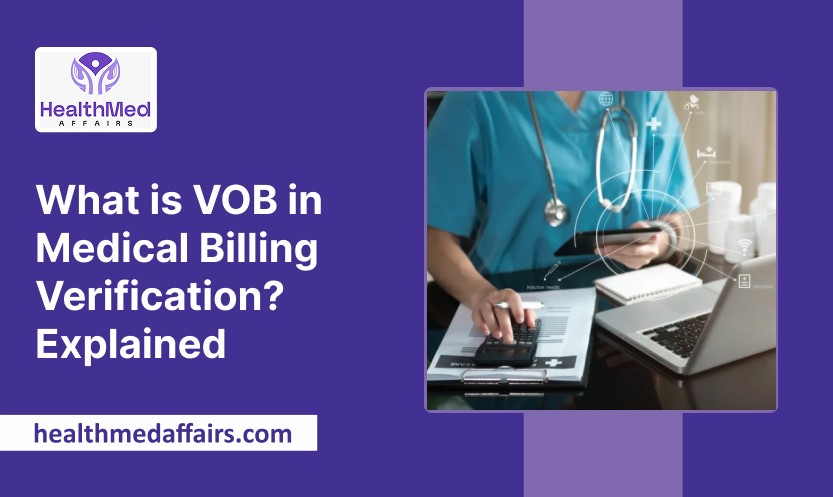
Billing problems in healthcare rarely start at the billing stage. They usually begin much earlier with incomplete or unverified insurance details. That is exactly what VOB in medical billing is designed to fix. Verification of benefits ensures that every detail of a patient’s insurance is checked before any service is delivered.
It answers critical questions about coverage, co-payments, deductibles, and approvals, so there are no surprises later. For healthcare providers, it means fewer claim denials and faster reimbursements. For patients, it means transparency and trust.
If you want cleaner claims and a stronger revenue cycle, understanding how VOB insurance works is not optional; it is essential.
What is VOB in Medical Billing?
VOB in medical billing stands for Verification of Benefits. It is the process of confirming a patient’s insurance coverage before any medical service is provided. This step ensures that healthcare providers clearly understand what the insurance company will pay and what the patient is responsible for.
Instead of waiting until after treatment to discover coverage issues, VOB helps identify them in advance. This reduces billing errors, prevents delays, and allows providers to plan services more effectively.
In simple terms, VOB acts as a financial checkpoint between the patient, provider, and insurance company. It ensures that all parties are aligned before any procedure takes place.
Key functions of VOB in medical billing include:
- Confirming if the patient’s insurance policy is active
- Identifying covered and non covered services
- Checking financial responsibilities such as co-pay and deductible
- Verifying if referrals or prior authorizations are required
What Does VOB Stand for in Medical Billing?
VOB stands for Verification of Benefits. It is one of the most important steps in the medical billing process and is often used interchangeably with terms like insurance verification or eligibility check. However, VOB is more detailed than a basic eligibility check.
While eligibility verification confirms whether a patient has active insurance, VOB goes deeper by analyzing the full scope of benefits under that plan. This includes financial details and service specific coverage information.
Here is what VOB typically covers:
- Patient eligibility status
- Effective dates of the policy
- Type of insurance plan
- Coverage limitations and exclusions
- Cost-sharing details
What is VOB Insurance?
The term VOB insurance often creates confusion, especially for patients and beginners in medical billing. It is important to clarify that VOB insurance is not a type of insurance plan. Instead, it refers to the process of verifying insurance benefits.
When someone mentions VOB insurance, they are usually talking about checking and confirming the details of an existing insurance policy. This includes understanding what services are covered, what costs are involved, and what approvals may be needed.
VOB insurance involves reviewing details such as:
- Coverage for specific procedures or treatments
- Co-payments and coinsurance percentages
- Deductible amounts and how much has been met
- Out-of-pocket maximum limits
- Requirements for prior authorization
By completing the VOB process correctly, healthcare providers can avoid misunderstandings and ensure that both billing and patient communication are accurate. It transforms insurance information into actionable insights that support smoother operations and better financial outcomes.
What is Verification of Benefits (VOB)?
Verification of benefits is a detailed process that goes beyond simply checking whether a patient has active insurance. It focuses on understanding exactly how that insurance applies to the specific medical services being planned. This step plays a central role in ensuring accuracy across the entire billing cycle.
When healthcare providers perform verification of benefits, they are essentially translating complex insurance policies into clear, usable information. This helps avoid confusion, reduces administrative back and forth, and ensures that claims are submitted the first time.
A complete verification of the benefits process typically includes:
- Confirming patient eligibility and policy status
- Reviewing covered services and exclusions
- Identifying financial responsibilities such as co-pay, deductible, and coinsurance
- Checking for service limits or visit caps
- Verifying referral and prior authorization requirements
By completing this process before treatment, providers gain a clear financial picture. This not only improves billing accuracy but also allows staff to communicate expected costs to patients with confidence.
Why is VOB Important in Medical Billing?
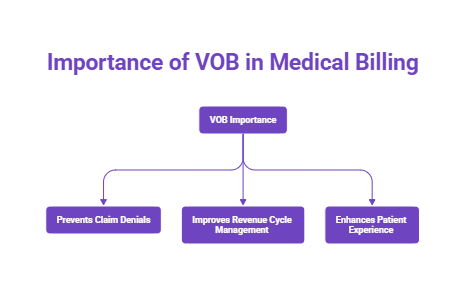
VOB is not just an administrative step. It is a critical function that directly impacts revenue, efficiency, and patient satisfaction. Skipping or rushing this process often leads to denied claims, delayed payments, and frustrated patients.
When done correctly, VOB strengthens every part of the medical billing workflow and minimizes financial risks.
1. Prevents Claim Denials
One of the most common reasons for claim rejection is incorrect or incomplete insurance information. VOB ensures that all details are verified in advance, reducing the chances of errors that lead to denials.
2. Improves Revenue Cycle Management
Accurate verification leads to cleaner claims, which means faster approvals and reimbursements. This improves cash flow and reduces the need for rework or follow-ups.
3. Enhances Patient Experience
Patients want clarity about their financial responsibilities. VOB allows providers to inform patients about expected costs upfront, which builds trust and avoids unexpected bills.
Additional benefits include:
- Reduced administrative workload
- Fewer billing disputes
- Better compliance with payer requirements
- Increased operational efficiency
What Information is Verified in VOB?
A thorough VOB process involves collecting and confirming a wide range of insurance details. Each piece of information plays a role in ensuring accurate billing and smooth claim processing.
Healthcare providers must go beyond basic checks and gather detailed insights that directly affect treatment and payment.
Key information verified during VOB includes:
- Patient eligibility: Confirms whether the insurance policy is active at the time of service
- Policy details: Includes plan type, effective dates, and coverage limitations
- Covered services: Identifies which procedures and treatments are included or excluded
- Co-payment: The fixed amount a patient must pay at the time of service
- Deductible: The amount a patient must pay before insurance starts covering costs
- Coinsurance: The percentage of costs shared between the patient and the insurer
- Out-of-pocket maximum: The maximum amount a patient will pay in a policy period
- Prior authorization requirements: Determine if approval is needed before performing certain procedures
- Referral requirements: Checks whether a primary care referral is needed for specialist visits
Collecting and verifying this information ensures that there are no surprises during billing. It allows providers to submit accurate claims and helps patients understand their financial responsibilities before receiving care.
Step-by-Step Process of VOB in Medical Billing
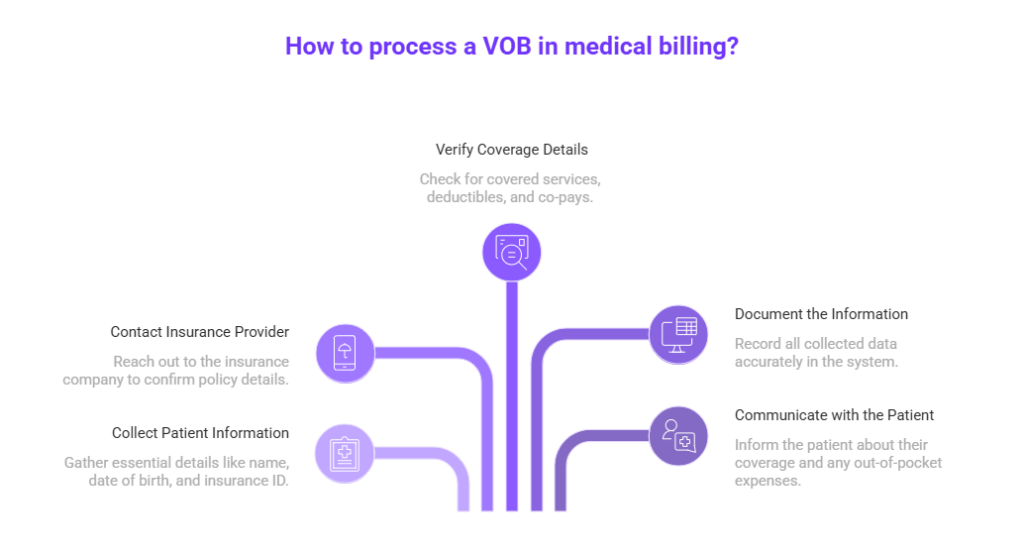
A structured VOB process ensures accuracy and consistency in insurance verification. Each step plays a crucial role in reducing billing errors and improving claim success rates. When followed correctly, this process creates a smooth workflow from patient intake to reimbursement.
Step 1: Collect Patient Information
The process begins with gathering accurate patient and insurance details. Even small errors at this stage can lead to claim denials later.
Information collected includes:
- Patient’s full name and date of birth
- Insurance provider name
- Policy number and group number
- Copy of insurance card
Step 2: Contact Insurance Provider
Once the information is collected, the next step is to verify it with the insurance company. This can be done through multiple channels, depending on the provider.
Common methods include:
- Insurance company portals
- Phone verification
- Clearinghouse systems
Step 3: Verify Coverage Details
At this stage, billing staff reviews all relevant benefits and coverage details related to the planned services.
Focus areas include:
- Covered and non-covered services
- Financial responsibilities
- Policy limitations and exclusions
- Authorization requirements
Step 4: Document the Information
All verified details must be accurately recorded in the billing system or patient management software. Proper documentation ensures consistency and helps during claim submission.
Step 5: Communicate with the Patient
The final step is informing the patient about their financial responsibility. Clear communication helps avoid confusion and builds trust.
This includes:
- Estimated out-of-pocket costs
- Required payments at the time of visit
- Any approvals or documents needed
Methods of Performing VOB
Healthcare providers can perform VOB using different methods depending on their resources, patient volume, and technology. Each method has its advantages and limitations.
Manual Verification
This traditional method involves calling insurance companies directly to confirm benefits.
Pros:
- Direct clarification from payer representatives
- Useful for complex cases
Cons:
- Time consuming
- Prone to human error
Online Portals
Many insurance providers offer online systems where benefits can be checked quickly.
Pros:
- Faster than manual calls
- Easy access to basic information
Cons:
- Limited details for complex cases
- Portal downtime issues
Automated Tools
Modern billing systems use automation and software integrations to verify benefits.
Pros:
- High efficiency and speed
- Reduced manual effort
- Scalable for large practices
Cons:
- Initial setup cost
- Requires system integration
Common Challenges in VOB
Despite its importance, VOB comes with several challenges that can impact accuracy and efficiency. Identifying these issues helps healthcare providers improve their processes.
Common challenges include:
- Incorrect patient information: Even minor errors in data entry can lead to incorrect verification results
- Frequent policy changes: Insurance plans often change, making it difficult to rely on outdated information
- Delayed responses from payers: Some insurance companies take time to provide complete details
- Complex insurance plans: Policies with multiple layers of coverage can be difficult to interpret
- Human errors: Manual processes increase the risk of missing or misinterpreting information
Best Practices for Effective VOB
To maximize the benefits of VOB, healthcare providers should follow proven strategies that improve accuracy and efficiency. Implementing best practices ensures consistent results and better financial outcomes.
Recommended best practices:
- Verify insurance before every patient visit
- Double-check all patient and policy details
- Use automated tools where possible
- Train staff regularly on updated payer rules
- Maintain clear and organized documentation
- Communicate transparently with patients about costs
By applying these practices, providers can reduce claim denials, improve workflow efficiency, and enhance patient satisfaction.
VOB vs Eligibility Verification: What is the Difference?
Although often used interchangeably, VOB and eligibility verification are not the same. Understanding the difference helps in applying the right process at the right time.
| Feature | VOB | Eligibility Verification |
| Scope | Detailed and comprehensive | Basic check |
| Coverage details | Included | Limited |
| Financial breakdown | Full details | Minimal |
| Purpose | Billing accuracy and planning | Confirm active insurance |
Eligibility verification answers a simple question: Is the patient insured
VOB answers a deeper question: What exactly does the insurance cover and how much will it pay
This distinction makes VOB a more valuable and necessary step in medical billing.
Conclusion
VOB in medical billing is more than just a routine administrative step. It is a critical process that ensures accuracy, transparency, and efficiency across the entire revenue cycle. By verifying insurance benefits in advance, healthcare providers can reduce claim denials, avoid billing errors, and maintain a steady cash flow.
At the same time, verification of benefits creates a better experience for patients by clearly outlining their financial responsibilities before treatment begins. This level of transparency builds trust and minimizes confusion or disputes later.
In a system where even small mistakes can lead to delays and lost revenue, VOB stands as a foundation for smooth operations. Providers who prioritize this process are better positioned to deliver both financial stability and high-quality patient care.