Running a profitable practice in Oregon takes more than delivering exceptional patient care. Health Med Affairs helps Oregon providers turn every billable service into revenue pursued with precision. We manage your billing and RCM around the payer demands, workflows, and reimbursement challenges Oregon practices face. From Portland to practices across the state, protect the revenue you earn with billing built for Oregon healthcare.


Medical billing in Oregon gets complicated fast when OHP patients, local Coordinated Care Organizations (CCOs), commercial payers, and Medicare all sit within the same revenue cycle. Oregon providers must verify whether an OHP patient is assigned to a CCO or fee-for-service before billing, while coverage, authorization, and billing procedures can vary by CCO.
For primary care, behavioral health, specialty clinics, dental practices, and other provider organizations, those payer-specific workflows can create costly friction when eligibility, authorization, enrollment, or claim routing is missed. That complexity can turn completed patient care into delayed claims, additional staff work, appeals, and revenue sitting outside your bank account.
Oregon even directs providers to the member’s CCO for CCO billing issues, while fee-for-service claims follow OHA processes. When your team is already balancing patients, documentation, scheduling, and clinical operations, chasing different payer rules becomes another drain on productivity. Your Oregon practice needs a billing operation designed around how reimbursement actually moves across the state.

Health Med Affairs approaches medical billing and coding in Oregon with payer-specific workflows built around your specialty, patient mix, CCO participation, and reimbursement path.
We verify eligibility and billing destinations, strengthen coding and claim accuracy, track authorization requirements, work denials, and follow aging claims instead of allowing Oregon’s payer complexity to become your revenue problem.
You focus on delivering care across Oregon. We focus on turning that care into cleaner claims, stronger follow-through, and revenue that keeps moving.
Health Med Affairs brings every stage of medical billing in Oregon into one connected, revenue-focused workflow built around your specialty, payer mix, and patient population. From the first eligibility check to final reimbursement, every claim receives the accuracy, attention, and follow-through needed to keep revenue moving.
Coverage is verified before services whenever possible, with close attention to OHP enrollment, CCO assignment, Medicare, and commercial insurance to reduce avoidable front-end billing problems.
Clinical documentation is translated into accurate, billable charges using specialty-appropriate coding practices, helping prevent missed charges, coding inconsistencies, and unnecessary reimbursement delays.
Claims are prepared according to the requirements of the responsible payer, rather than forcing every Oregon patient and insurance plan through the same standardized billing workflow.
Every claim passes through accuracy checks at multiple stages before submission, helping identify demographic, coding, modifier, eligibility, and claim-data issues before they become denials.
Submission is only the beginning. Claim status is carefully monitored continuously through adjudication so pending, rejected, or stalled claims can receive attention before they age unnecessarily.
Denials are analyzed, corrected, appealed, and tracked by reason, helping uncover recurring problems that can be addressed upstream instead of repeatedly costing the practice revenue.
Outstanding balances are segmented by payer, age, value, and status, allowing follow-up efforts to focus on claims that need action instead of letting collectible revenue disappear into aging reports.
Clear reporting gives Oregon practices visibility into claims, denials, collections, A/R, and billing performance, turning revenue-cycle data into practical opportunities for stronger financial control.
Stop letting payer complexity, denials, and aging claims stand between your Oregon practice and the revenue it has already earned. Put Health Med Affairs behind your revenue cycle and turn billing into a stronger path to payment.
Billing OHP correctly starts with knowing who should receive the claim. Oregon Health Authority instructs providers to verify eligibility and enrollment before billing: if the patient is enrolled in a Coordinated Care Organization, the CCO is generally billed; when the patient is not enrolled in a CCO, the claim may follow OHA’s fee-for-service pathway.
CCOs serve more than 90% of OHP members, and their billing, authorization, coverage, credentialing, and reimbursement procedures can differ. Health Med Affairs helps keep those moving parts organized, from eligibility and CCO identification to claim preparation, authorization tracking, denial follow-up, and A/R management.
The goal is simple: send the right claim down the right Oregon reimbursement path the first time, then stay on it until it reaches resolution.
An Oregon practice may see OHP members, Medicare beneficiaries, commercially insured patients, and patients with more than one source of coverage. For OHP specifically, other insurance can affect billing order, requiring providers to bill third-party resources before Medicaid. Health Med Affairs structures workflows around the payer responsible for each claim rather than treating every encounter the same.
Eligibility, enrollment, claim routing, authorization requirements, denials, and follow-up receive payer-specific attention.
Claims are prepared with close attention to coverage, coding, documentation, and Medicare billing requirements.
Payer-specific edits, authorization requirements, claim status, underpayments, and denials are tracked through resolution.
Coordination of benefits is reviewed so claims move through the correct payment sequence instead of stalling between payers.
The advantage? Your staff doesn't have to build separate billing expertise for every payer on the schedule. Health Med Affairs brings those workflows under one revenue cycle operation.
A behavioral health claim doesn’t move like an orthopedic claim, and a primary care practice doesn’t bill like a therapy clinic. Health Med Affairs adapts coding, claim review, authorization, denial management, and follow-up to the clinical and financial realities of the specialty.Different care models deserve different billing strategies, not the same template with a different specialty name.
| Practice Specialty | Billing Focus |
|---|---|
| Primary Care | E/M accuracy, preventive services, recurring patient volume |
| Behavioral Health | Session coding, authorization, documentation, recurring claims |
| Cardiology | Diagnostic testing, procedures, modifiers, medical necessity |
| Orthopedics | Procedures, imaging, injections, surgical billing |
| Physical Therapy | Units, timed services, authorization, visit limits |
| OB/GYN | Global care, procedures, maternity billing, payer rules |
| Pediatrics | Preventive visits, immunizations, age-specific coding |
| Dermatology | Procedures, biopsies, pathology, medical-versus-cosmetic distinctions |
| Pain Management | Procedures, authorization, documentation, modifier accuracy |
| Multi-Specialty Groups | Provider-level workflows, cross-specialty billing, consolidated reporting |
Great billing cannot compensate for enrollment problems. OHA states that the NPI used on an OHA claim must be actively enrolled for the claim’s dates of service, while individual CCOs can maintain their own provider enrollment and credentialing requirements.Health Med Affairs connects credentialing support with the bigger revenue-cycle picture, helping Oregon practices move from ready to practice toward ready to bill.
Oregon’s CCO landscape is geographically structured, with organizations serving defined counties and, in some cases, specific ZIP codes. That makes location more than an SEO keyword. It can be relevant to the payer and network environment surrounding an Oregon practice.
Scalable billing support for independent and expanding practices without building a larger in-house billing department.
Specialty-focused billing and A/R support designed around the practice's actual payer mix.
Health Med Affairs supports providers across Oregon with remote billing operations built to stay connected to the practice.

Billing support for independent physicians, specialty clinics, behavioral health providers, and growing group practices.
End-to-end RCM support for practices serving patients across public and commercial payer populations.
Revenue-cycle workflows built to keep eligibility, payer routing, claims, denials, and follow-up organized as the local payer environment changes. OHA documented a Lane County CCO transition during 2026, illustrating why current enrollment information matters.
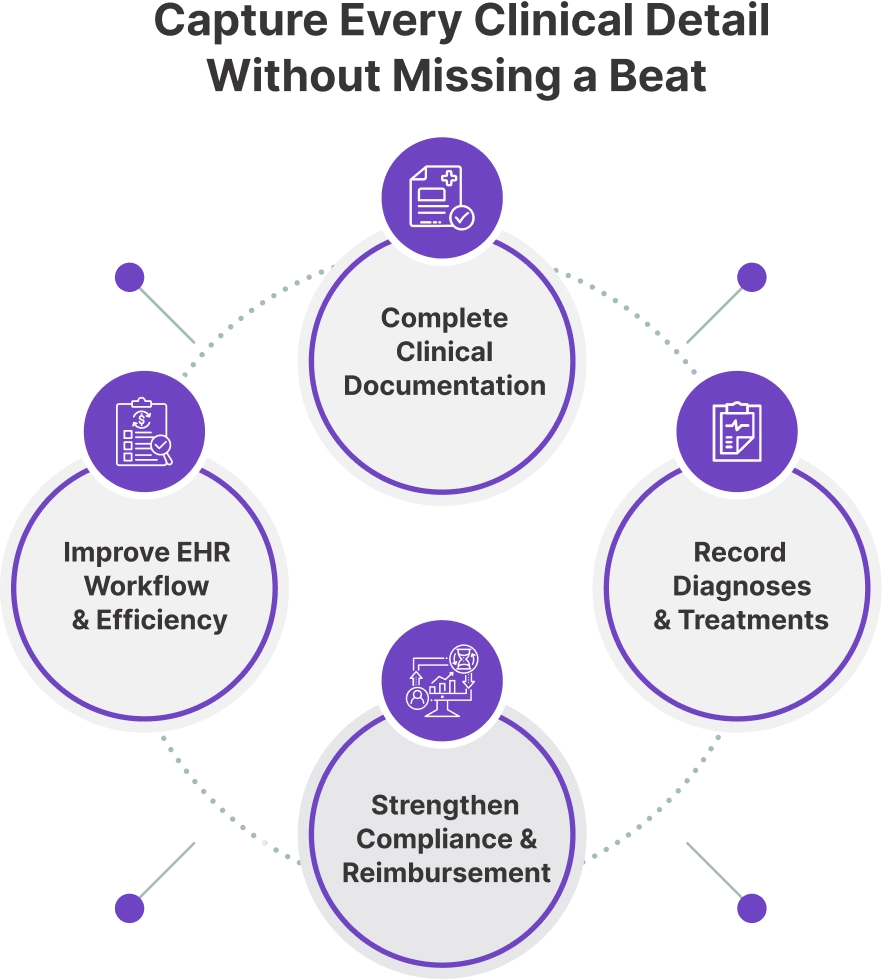
Switching medical billing companies can feel risky when open claims, aging A/R, unresolved denials, payer logins, reports, and months of billing history are still sitting with the previous team. That’s why Health Med Affairs treats transition as a revenue-protection project, not simply an account setup.
A practice shouldn’t have to wait until month-end to discover that claims are aging, denials are accumulating, or payer balances haven’t moved. Health Med Affairs turns billing reports into actionable revenue visibility, giving your practice a clearer picture of where money is and what happens next.
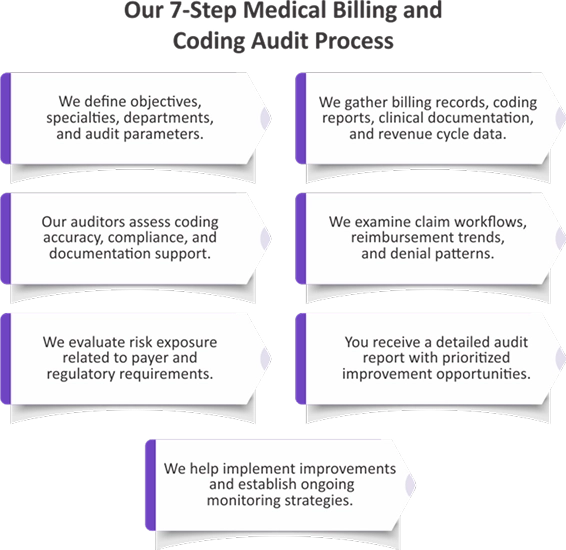
Because “Claim Submitted” Isn’t the Finish Line!
Claims are tracked beyond transmission because a submitted claim has produced no revenue until it is adjudicated and paid appropriately.
Recurring denial patterns can be traced back to workflow, coding, eligibility, authorization, or payer-specific issues so the same problems aren't simply repeated.
Aging balances receive structured follow-up based on payer, status, age, and next action.
Oregon-specific workflows can account for OHP, fee-for-service billing, CCO assignment, and payer-specific requirements. OHA itself directs providers down different billing pathways depending on CCO enrollment.
Health Med Affairs is built to function as an extension of your revenue cycle, with the focus staying where it belongs: getting accurately billed care closer to collected revenue.
Every unresolved denial, aging claim, enrollment issue, and missed follow-up can put more distance between care delivered and revenue collected. Give Health Med Affairs a closer look at your Oregon revenue cycle and discover where your billing operation has room to work harder.