

Every healthcare practice relies on timely reimbursements to maintain healthy cash flow and deliver uninterrupted patient care. However, not every claim gets paid immediately. Outstanding balances from insurance companies and patients become part of a practice’s Accounts Receivable (A/R), making it one of the most important components of the medical billing process.
When A/R is managed effectively, providers can accelerate payments, reduce claim denials, improve collection rates, and strengthen overall financial performance. On the other hand, poorly managed receivables can lead to delayed reimbursements, revenue leakage, and operational challenges.
Exploring how A/R works, why it accumulates, and the strategies used to manage it is essential for healthcare organizations looking to maximize revenue and maintain long-term financial stability.
What Does A/R Mean in Medical Billing?
Accounts Receivable (A/R) in medical billing refers to the outstanding payments owed to healthcare providers for services already delivered. These payments may be due from insurance companies, patients, or both. In simple terms, whenever a claim is submitted but payment has not yet been received, the balance becomes part of the provider’s accounts receivable.
A/R is considered one of the most important financial indicators in healthcare because it directly affects cash flow and profitability. Every unpaid claim represents revenue that has been earned but not yet collected. The longer claims remain in A/R, the greater the risk of delayed payments, denials, or lost revenue.
Healthcare organizations monitor their A/R closely to ensure claims are processed efficiently, and payments are collected within an acceptable timeframe. Effective A/R management helps providers maintain financial stability while continuing to deliver quality patient care.
Why Is A/R Important in Healthcare Revenue Cycle Management?
Accounts Receivable serves as a critical component of Revenue Cycle Management (RCM). While revenue cycle management covers the entire process from patient scheduling to final payment collection, A/R focuses specifically on recovering outstanding balances.
A well-managed A/R process offers several benefits:
- Improves cash flow and financial health
- Reduces claim denials and payment delays
- Increases reimbursement rates
- Identifies billing and coding issues early
- Enhances operational efficiency
- Supports long-term practice growth
Healthcare providers with strong A/R management processes often experience faster reimbursements and fewer financial disruptions than those with high levels of aged receivables.
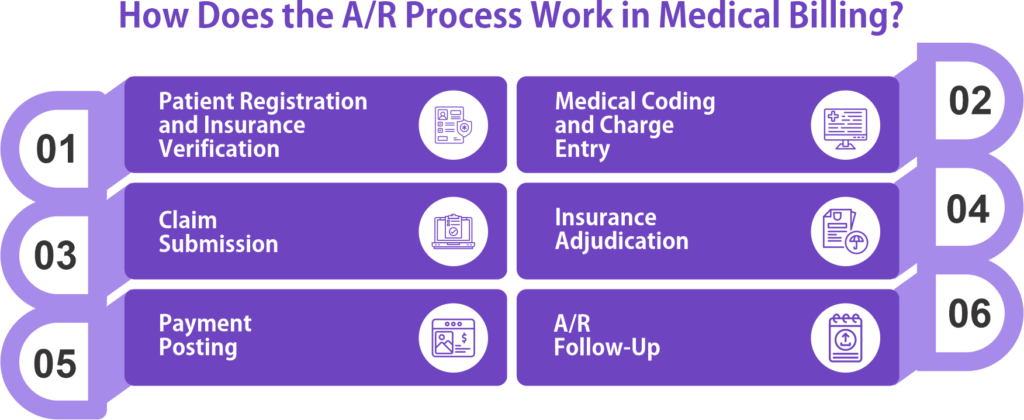
How Does the A/R Process Work in Medical Billing?
The A/R process begins when healthcare services are provided and continues until all payments are collected and reconciled. Each step plays a crucial role in ensuring providers receive accurate and timely reimbursement.
Step 1: Patient Registration and Insurance Verification
The process starts with collecting accurate patient information and verifying insurance eligibility. Errors at this stage can result in claim rejections, payment delays, and increased accounts receivable.
Step 2: Medical Coding and Charge Entry
After treatment, healthcare services are translated into standardized medical codes. These codes are entered into the billing system along with applicable charges.
Step 3: Claim Submission
The medical claim is submitted electronically to the insurance company for review. Clean and accurate claims are more likely to be processed quickly and paid on the first submission.
Step 4: Insurance Adjudication
The insurance payer reviews the claim and determines the amount covered under the patient’s policy. Claims may be approved, partially paid, denied, or returned for additional information.
Step 5: Payment Posting
Once reimbursement is received, payments are posted to the patient’s account. Any remaining balance becomes the responsibility of the patient or requires additional follow-up with the payer.
Step 6: A/R Follow-Up
Outstanding claims are monitored and followed up on regularly. Billing teams contact insurance companies, investigate denials, correct errors, and resubmit claims when necessary.
Step 7: Patient Collections and Resolution
After insurance payments are finalized, any remaining patient responsibility such as deductibles, copayments, or coinsurance, is collected. The account is considered resolved once the balance is paid in full.
Types of Accounts Receivable in Medical Billing
Not all outstanding balances are the same. Understanding different types of accounts receivable helps healthcare providers prioritize collection efforts and improve reimbursement performance.
1. Insurance Accounts Receivable
Insurance A/R includes unpaid claims that are awaiting reimbursement from insurance companies. This category often represents the largest portion of a healthcare organization’s receivables.
Common reasons for insurance A/R include:
- Pending claim reviews
- Prior authorization issues
- Coding discrepancies
- Missing documentation
- Claim denials and appeals
Since insurance reimbursements account for a significant portion of provider revenue, managing insurance A/R effectively is essential.
2. Patient Accounts Receivable
Patient A/R consists of balances owed directly by patients after insurance processing is complete.
These balances may include:
- Copayments
- Deductibles
- Coinsurance amounts
- Non-covered services
- Self-pay accounts
As patient financial responsibility continues to increase, healthcare organizations must adopt effective collection strategies to minimize outstanding patient balances.
3. Current A/R vs. Aged A/R
Accounts receivable are also categorized based on how long balances remain unpaid.
| A/R Category | Days Outstanding | Risk Level |
| Current A/R | 0-30 Days | Low |
| Early Aging | 31-60 Days | Moderate |
| Delayed A/R | 61-90 Days | High |
| Aged A/R | 91+ Days | Very High |
The longer an account remains unpaid, the lower the likelihood of successful collection. This is why healthcare organizations closely monitor aging trends.
A/R Aging in Medical Billing
A/R aging is one of the most important tools used to evaluate the financial health of a healthcare practice. It helps billing teams identify unpaid claims and prioritize collection efforts based on the age of outstanding balances.
What Is an A/R Aging Report?
An A/R aging report is a financial document that categorizes outstanding receivables according to the number of days they have remained unpaid. The report provides a clear overview of pending claims and highlights potential collection issues.
Healthcare administrators use aging reports to:
- Monitor outstanding balances
- Identify delayed reimbursements
- Evaluate collection performance
- Prioritize follow-up activities
- Improve cash flow management
A/R Aging Buckets Explained
Most aging reports divide receivables into specific categories:
0-30 Days: These are newly submitted claims that are still within normal payment timelines.
31-60 Days: Claims in this category may require monitoring to ensure timely reimbursement.
61-90 Days: Balances reaching this stage often require active follow-up to prevent further delays.
91-120 Days: Claims in this range have a higher risk of denial, underpayment, or collection challenges.
120+ Days: These accounts are considered severely aged and often require intensive collection efforts or appeals.
Why A/R Aging Reports Matter?
Aging reports help organizations identify trends before they become major financial problems. By reviewing reports regularly, healthcare providers can reduce outstanding balances and improve reimbursement cycles.
Red Flags in A/R Aging Reports
Watch for these warning signs:
- More than 20% of receivables exceeding 90 days
- Increasing denial rates
- Large volumes of unpaid high-value claims
- Consistent payer-specific delays
- Rising patient balances
Addressing these issues early can significantly improve revenue collection outcomes.
What Is A/R Follow-Up in Medical Billing?
A/R follow-up is the process of actively pursuing unpaid claims and outstanding balances to ensure healthcare providers receive appropriate reimbursement for services rendered.
Without consistent follow-up, claims can remain unpaid for months, resulting in revenue loss and cash flow challenges.
What Does an A/R Specialist Do?
An A/R specialist is responsible for identifying and resolving issues that prevent payment collection. Their primary goal is to reduce outstanding receivables and maximize reimbursements.
Key responsibilities include:
- Reviewing unpaid claims
- Contacting insurance companies
- Investigating claim denials
- Correcting billing errors
- Submitting appeals
- Tracking payment status
- Resolving underpayments
- Following up on patient balances
Daily A/R Follow-Up Activities
A typical A/R follow-up process may involve:
- Checking claim status with insurance payers
- Reviewing explanation of benefits (EOBs)
- Correcting coding or documentation issues
- Resubmitting rejected claims
- Filing appeals for denied claims
- Negotiating payment discrepancies
- Updating account records
Why A/R Follow-Up Is Critical
Effective follow-up directly impacts a provider’s ability to collect revenue. Organizations that proactively manage their accounts receivable often experience:
- Faster claim resolution
- Lower denial rates
- Improved cash flow
- Reduced aging balances
- Higher collection percentages
In many cases, a strong A/R follow-up strategy can recover thousands of dollars in revenue that might otherwise be lost.
Common Causes of High A/R in Medical Billing
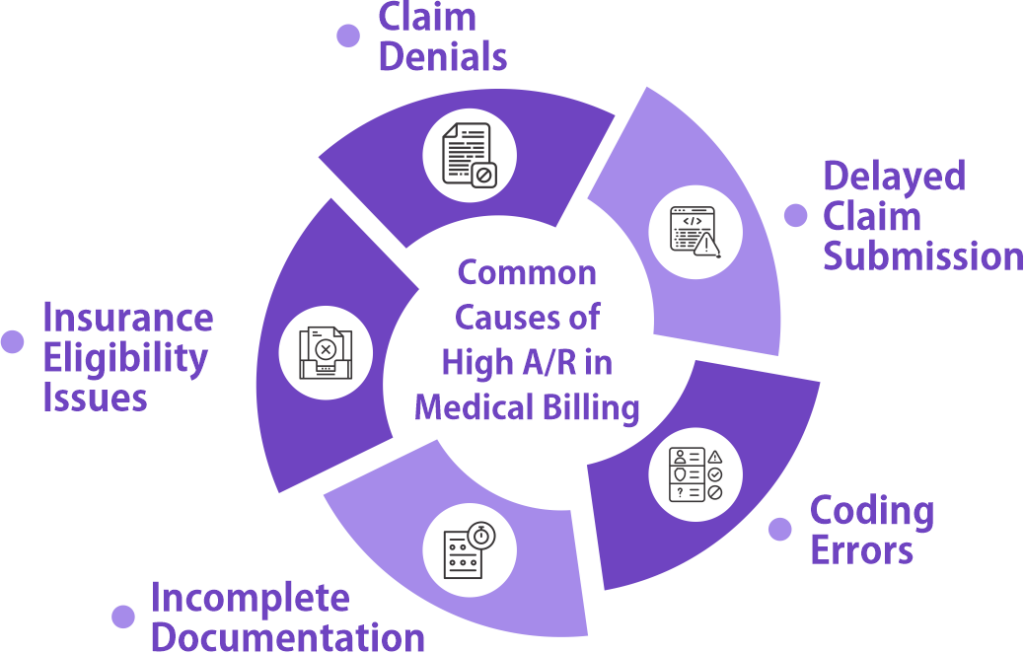
A growing accounts receivable balance is often a sign of inefficiencies within the billing and reimbursement process. When claims remain unpaid for extended periods, healthcare providers face cash flow disruptions and increased administrative costs. Understanding the root causes of high A/R is the first step toward improving collections and reducing revenue leakage.
1. Claim Denials
Claim denials are among the most common reasons for increased accounts receivable. Insurance companies may deny claims due to coding errors, missing information, lack of medical necessity, or eligibility issues.
Even though denied claims can often be appealed and resubmitted, the additional processing time delays reimbursement and increases the age of receivables.
2. Coding Errors
Incorrect CPT, ICD-10, or HCPCS codes can lead to claim rejections, denials, or underpayments. Even minor coding mistakes may require claims to be corrected and resubmitted, significantly extending payment timelines.
Regular coding audits and staff training can help minimize these costly errors.
3. Insurance Eligibility Issues
Failure to verify patient insurance coverage before treatment can result in denied claims and unexpected patient balances. Eligibility issues often occur when coverage has expired, policy information is outdated, or services are not covered under the patient’s plan.
4. Delayed Claim Submission
The longer a claim takes to be submitted, the greater the risk of reimbursement delays. Many insurance companies enforce strict filing deadlines, and missing these deadlines can lead to permanent revenue loss.
Timely claim submission is essential for maintaining healthy A/R levels.
5. Incomplete Documentation
Insurance companies require complete and accurate documentation to process claims successfully. Missing physician notes, supporting records, or authorization documents can delay payment or trigger claim denials.
6. Underpayments by Insurance Companies
Not all payment issues involve outright denials. Sometimes insurers reimburse less than the contracted amount, creating hidden revenue losses that require additional follow-up and reconciliation.
7. Weak Patient Collection Processes
As patient financial responsibility continues to rise, collecting payments from patients has become increasingly challenging. Poor communication, lack of payment options, and delayed billing statements often contribute to higher patient A/R balances.
Key A/R Metrics Every Healthcare Practice Should Track
Monitoring the right performance indicators allows healthcare organizations to evaluate the effectiveness of their accounts receivable management strategy. These metrics help identify bottlenecks, improve collections, and support better financial decision-making.
Days in A/R:
Days in A/R measures the average number of days it takes a provider to collect payments after services have been rendered.
Formula:
Days in A/R = Total Accounts Receivable ÷ Average Daily Charges
A lower Days in A/R figure generally indicates a healthier revenue cycle and faster reimbursements.
Industry Benchmarks
| Days in A/R | Performance Level |
| Under 30 Days | Excellent |
| 30-40 Days | Good |
| 40-50 Days | Average |
| Above 50 Days | Needs Improvement |
Net Collection Rate (NCR): The Net Collection Rate measures the percentage of collectible revenue that a healthcare provider successfully receives. A high NCR indicates efficient billing, follow-up, and collection processes.
Gross Collection Rate (GCR): Gross Collection Rate evaluates how much revenue is collected before contractual adjustments and write-offs are considered. While useful, it should be analyzed alongside Net Collection Rate for a more accurate picture of financial performance.
First-Pass Claim Acceptance Rate: This metric measures the percentage of claims accepted by payers on the first submission without requiring corrections. Higher acceptance rates generally result in lower A/R balances and faster reimbursements.
Denial Rate: The denial rate indicates the percentage of claims denied by insurance companies. A consistently high denial rate often signals problems with coding, documentation, eligibility verification, or claim submission processes.
Percentage of A/R Over 90 Days: This metric reveals how much of a provider’s receivables have remained unpaid for more than 90 days. Most healthcare organizations aim to keep this percentage as low as possible because older balances are significantly harder to collect.
Bad Debt Ratio: The bad debt ratio measures the amount of receivables ultimately written off as uncollectible. Monitoring this metric helps organizations identify weaknesses in patient collection and reimbursement processes.
A/R Management Best Practices in Medical Billing
Successful accounts receivable management requires a proactive approach that combines accurate billing, timely follow-up, and continuous performance monitoring. Implementing proven best practices can significantly improve reimbursement rates and reduce aging balances.
Verify Insurance Before Every Visit:
Insurance verification is one of the simplest ways to prevent claim denials. Confirming eligibility, coverage limitations, and authorization requirements before services are provided helps reduce payment delays.
Submit Claims Promptly:
Timely claim submission ensures faster processing and minimizes the risk of missing payer filing deadlines. Many healthcare organizations establish claim submission targets within 24 to 48 hours of service delivery.
Reduce Coding Errors:
Accurate medical coding is essential for maximizing reimbursement and avoiding claim rejections. Ongoing coder education and periodic audits can improve coding accuracy and compliance.
Prioritize High-Value Claims:
Not all unpaid claims have the same financial impact. Focusing follow-up efforts on high-dollar claims often produces quicker and more meaningful revenue recovery results.
Review Aging Reports Regularly:
Weekly or biweekly reviews of aging reports allow billing teams to identify problematic claims before they become difficult to collect.
Strengthen Denial Management:
A structured denial management process helps identify recurring denial patterns, address root causes, and improve future claim acceptance rates.
Improve Patient Payment Collection:
Offering multiple payment options, transparent billing statements, and payment plans can help increase patient collections and reduce outstanding balances.
Automate Follow-Up Activities:
Modern billing systems can automate claim tracking, payment reminders, and account monitoring, helping staff focus on more complex collection issues.
A/R in Medical Billing vs. Revenue Cycle Management (RCM)
Many healthcare professionals use the terms A/R and Revenue Cycle Management interchangeably, but they are not the same. Understanding the distinction is important for improving overall financial performance.
| Feature | Accounts Receivable (A/R) | Revenue Cycle Management (RCM) |
| Primary Focus | Outstanding Payments | Entire Revenue Cycle |
| Starting Point | After Claim Submission | Before Patient Visit |
| Goal | Recover Unpaid Revenue | Optimize Revenue Generation |
| Scope | Collections and Follow-Up | End-to-End Financial Process |
| Timeline | Post-Service Activities | Pre-Service to Final Payment |
Accounts Receivable is a subset of Revenue Cycle Management. While RCM encompasses every stage of the patient financial journey, A/R focuses specifically on collecting outstanding payments and resolving unpaid claims.
A healthcare practice may have an excellent patient intake process and accurate claim submission workflow, but if its A/R management is weak, revenue collection will still suffer. For this reason, successful healthcare organizations treat A/R management as a critical component of a broader revenue cycle strategy.
Challenges in Medical Billing A/R Management
Managing accounts receivable is becoming increasingly complex as healthcare regulations evolve, patient payment responsibilities grow, and insurance requirements become more stringent. Even organizations with established billing processes face challenges that can negatively impact cash flow and reimbursement timelines.
Rising Patient Financial Responsibility:
High-deductible health plans and increasing out-of-pocket healthcare costs have shifted a larger portion of financial responsibility to patients. As a result, healthcare providers often face delays in collecting patient balances, leading to higher patient A/R.
Patients may postpone payments due to financial constraints, confusion about billing statements, or a lack of flexible payment options.
Complex Insurance Policies:
Insurance plans vary significantly in terms of coverage, authorization requirements, reimbursement rules, and documentation standards. Keeping up with changing payer policies can be difficult and often results in claim delays or denials.
Prior Authorization Delays:
Many healthcare services require prior authorization before treatment can be provided. Missing or incomplete authorizations can lead to claim denials and extended reimbursement cycles.
Staffing Shortages and Resource Constraints:
Healthcare organizations often struggle with limited billing staff and increasing administrative workloads. Without adequate resources, claims may not receive timely follow-up, causing A/R balances to grow.
Regulatory and Compliance Changes:
Healthcare billing regulations frequently change, requiring providers to continuously update processes and train staff. Failure to comply with payer requirements or government regulations can result in denied claims and financial penalties.
Increasing Claim Denials:
Insurance companies have become more aggressive in claim reviews and payment audits. Even minor documentation issues can trigger denials, requiring additional time and resources to resolve.
Technology Integration Issues:
Many healthcare providers use multiple software systems that may not communicate effectively with one another. Poor integration can create workflow inefficiencies, data inconsistencies, and delays in payment collection.
When Should Healthcare Providers Outsource A/R Management?
Managing accounts receivable in-house can be challenging, especially for healthcare organizations dealing with large claim volumes, staffing limitations, or rising denial rates. In many cases, outsourcing A/R services and management can improve collections and allow providers to focus more on patient care.
Signs You May Need A/R Outsourcing
Healthcare organizations should consider outsourcing if they experience:
- Increasing Days in A/R
- High denial rates
- Large volumes of unpaid claims
- Staff shortages
- Poor collection performance
- Revenue leakage from unresolved accounts
- Difficulty keeping up with payer requirements
When these issues persist, outsourcing can provide specialized expertise and dedicated resources to improve financial outcomes.
Conclusion
Accounts Receivable is the financial lifeline of every healthcare organization. It represents the revenue that providers have earned but have not yet collected from insurance companies or patients. While unpaid balances are a normal part of the medical billing process, excessive or poorly managed A/R can lead to cash flow challenges, increased administrative costs, and significant revenue loss.
Ultimately, successful A/R management is not just about collecting payments. It is about creating a more efficient revenue cycle, improving operational performance, and ensuring healthcare organizations have the financial resources needed to continue delivering exceptional patient care.