

What happens if you miss your Medicare revalidation deadline? Missing a Medicare revalidation deadline can interrupt Medicare reimbursement and affect your practice’s revenue cycle. What Happens If You Miss Your Medicare Revalidation Deadline? CMS generally requires providers and suppliers to revalidate every five years, while DMEPOS suppliers typically revalidate every three years.
In 2026, CMS continues to publish Medicare revalidation due dates six to seven months in advance and sends reminder notices about three to four months before the deadline. Even if you do not receive a reminder, you remain responsible for monitoring your revalidation due date and submitting your application on time.
This guide explains the consequences of missing a Medicare revalidation deadline, how it affects billing privileges and reimbursements, and the steps to restore active enrollment. It also covers the Medicare revalidation process, common mistakes, and practical compliance tips to help providers avoid future disruptions.
Why Medicare Revalidation Matters for Healthcare Providers
Before understanding the consequences of a missed deadline, it is important to know why CMS requires Medicare provider revalidation. This section explains the purpose, eligibility, and revalidation schedule that help providers maintain active Medicare billing privileges.
What Is Medicare Provider Revalidation?
Medicare provider revalidation is the process CMS uses to confirm that a provider’s enrollment information is accurate and updated. Completing the Medicare provider revalidation process on time helps maintain active Medicare billing privileges and uninterrupted reimbursement.
- Verifies provider enrollment information.
- Confirms continued Medicare eligibility.
- Supports uninterrupted Medicare billing.
Why CMS Requires Provider Revalidation
CMS Medicare revalidation helps verify provider identity, ownership, licensure, practice locations, and other enrollment records. This process supports program integrity, reduces inaccurate enrollment data, and confirms that providers continue to meet Medicare participation requirements.
- Updates provider enrollment records.
- Verifies compliance with CMS requirements.
- Helps reduce inaccurate provider information.
Who Must Complete Medicare Revalidation?
Most Medicare-enrolled physicians, non-physician practitioners, group practices, healthcare organizations, and DMEPOS suppliers must complete Medicare provider revalidation if requested by CMS. Every enrolled provider is responsible for meeting the assigned Medicare revalidation deadline.
- Individual Medicare providers.
- Group practices and healthcare organizations.
- DMEPOS suppliers enrolled with Medicare.
Standard Revalidation Timeframes
Most Medicare providers and suppliers complete the Medicare revalidation process every five years. DMEPOS suppliers generally revalidate every three years, although CMS may establish a different schedule when necessary.
- Most providers revalidate every five years.
- DMEPOS suppliers revalidate every three years.
- CMS may request off-cycle revalidation.
Routine vs. Off-Cycle Revalidation
Routine revalidation follows the standard CMS schedule based on provider enrollment. Off-cycle CMS Medicare revalidation may occur when CMS requests updated information because of enrollment changes, data verification needs, or other program requirements.
- Routine revalidation follows the scheduled cycle.
- Off-cycle requests occur outside the regular schedule.
- Providers should respond promptly to CMS requests.
What Happens If You Miss Your Medicare Revalidation Deadline?
What Happens If You Miss Your Medicare Revalidation Deadline? Missing the Medicare revalidation deadline can interrupt Medicare billing and affect your practice’s revenue. This section explains the immediate consequences, reimbursement delays, and financial effects of failing to complete the Medicare revalidation process on time.
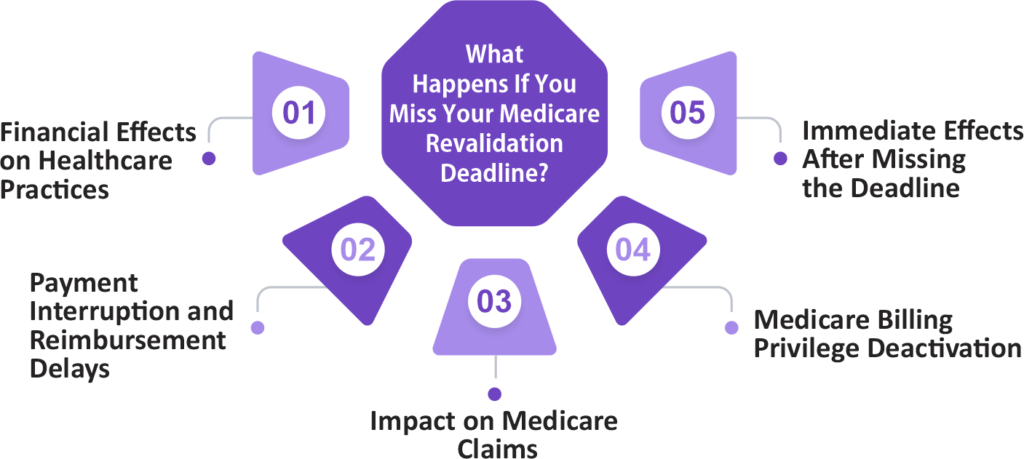
Immediate Effects After Missing the Deadline
If you miss your Medicare revalidation deadline, CMS may begin reviewing your enrollment status. Delayed action can increase the risk of billing interruptions and administrative delays.
Your Medicare Administrative Contractor (MAC) may issue additional notices requesting that you complete the required revalidation. Ignoring these notices may lead to further enrollment actions.
Taking immediate action helps reduce delays in restoring active Medicare enrollment. Prompt communication with your MAC and timely submission of your application can lead to a better resolution.
1. CMS may begin the deactivation process.
2. Billing activities may be interrupted.
3. Immediate action helps reduce further delays.
Medicare Billing Privilege Deactivation
CMS may deactivate Medicare billing privileges when providers fail to complete CMS Medicare revalidation by the required deadline. Deactivation prevents providers from submitting payable Medicare claims.
A deactivated provider must complete the required enrollment updates before Medicare billing privileges can be restored. Processing times may vary depending on application accuracy.
Billing services should confirm the provider’s enrollment status before submitting new Medicare claims. This helps reduce unnecessary claim rejections.
- Medicare billing privileges may be deactivated.
- A revalidation application is required for reactivation.
- Claims submitted after deactivation may not be payable.
Impact on Medicare Claims
A missed Medicare provider revalidation deadline can interrupt Medicare claim processing. Claims submitted after billing privileges are deactivated are generally not eligible for payment.
Delayed claim processing may increase outstanding receivables and require additional follow-up by billing staff. This can affect reimbursement timelines.
Practice managers should review claim status regularly while enrollment issues are being resolved. Early action helps identify payment problems before they grow.
1. Claim payments may be delayed.
2. Billing interruptions can affect cash flow.
3. Claims submitted during deactivation may be denied.
Payment Interruption and Reimbursement Delays
Failure to complete the Medicare revalidation process before the assigned deadline may affect Medicare reimbursement. Payment delays can affect the financial stability of healthcare practices.
Practices that rely on Medicare revenue could experience reduced cash collections during periods of billing disruption. This can influence routine financial planning.
Monitoring reimbursement activity enables billing teams to identify payment concerns rapidly. Timely follow-up helps reduce unnecessary delays.
1. Medicare payments may be placed on hold.
2. Accounts receivable may increase.
3. Cash flow may become less predictable.
Financial Effects on Healthcare Practices
Missing a Medicare revalidation deadline can affect both revenue and daily operations. Healthcare organizations may spend additional time correcting enrollment issues instead of focusing on patient care.
Administrative staff often need to gather documents, communicate with CMS, and monitor application progress. These responsibilities increase operational workload.
Maintaining an organized compliance process helps reduce financial disruption and supports uninterrupted Medicare participation. Regular monitoring also lowers the risk of future enrollment issues.
1. Medicare revenue may decrease temporarily.
2. Administrative workload may increase.
3. Practice operations may experience financial disruption.
What to Do After Missing Your Medicare Revalidation Deadline
Acting quickly after a missed deadline can reduce billing interruptions and support faster enrollment recovery. This section explains the key steps providers should follow to restore Medicare provider revalidation status and meet CMS Medicare revalidation requirements.
Verify Your Medicare Enrollment Status
Begin by checking your Medicare enrollment status through the CMS Medicare Revalidation Due Date List or PECOS. This confirms whether your billing privileges remain active and identifies any actions needed to restore compliance.
Review your assigned Medicare revalidation deadline and compare it with your current enrollment status. Identifying issues early allows providers to begin the Medicare revalidation process without unnecessary delays.
Contact Your Medicare Administrative Contractor (MAC)
Contact your Medicare Administrative Contractor (MAC) immediately after you miss your Medicare revalidation deadline. Your MAC can explain your enrollment status, identify outstanding requirements, and provide instructions for reactivation.
Keep a record of every communication with your MAC and respond promptly to any guidance received. Clear communication helps avoid additional delays while your enrollment is under review.
Submit a Complete Revalidation Application
Complete the Medicare revalidation process through PECOS or the appropriate CMS enrollment application. Accurate provider information and complete documentation help reduce processing delays and requests for corrections.
Before submitting the application, review every section to confirm that ownership details, practice information, licenses, and contact information are current. Complete applications are processed more efficiently.
Respond to Documentation Requests Promptly
During the review process, CMS or your MAC may request additional documentation to verify your enrollment information. Responding within the requested timeframe helps prevent further delays in restoring Medicare billing privileges.
Monitor email, postal mail, and PECOS notifications regularly after submitting your application. Timely responses help keep the review process moving and reduce the chance of extended billing interruptions.
Monitor Your Application Through PECOS
After submitting your application, check PECOS regularly to monitor the review status and identify any pending requests. Monitoring your application allows providers to address issues before they affect approval.
Continue tracking your application until CMS confirms that your Medicare provider revalidation has been approved. Resume Medicare billing only after your enrollment status shows active billing privileges.
Common Reasons Providers Miss Medicare Revalidation Deadlines
Understanding why providers miss the Medicare revalidation deadline helps practices reduce avoidable enrollment issues. This section explains the most common causes and the steps healthcare organizations can take to improve compliance with the Medicare revalidation process.
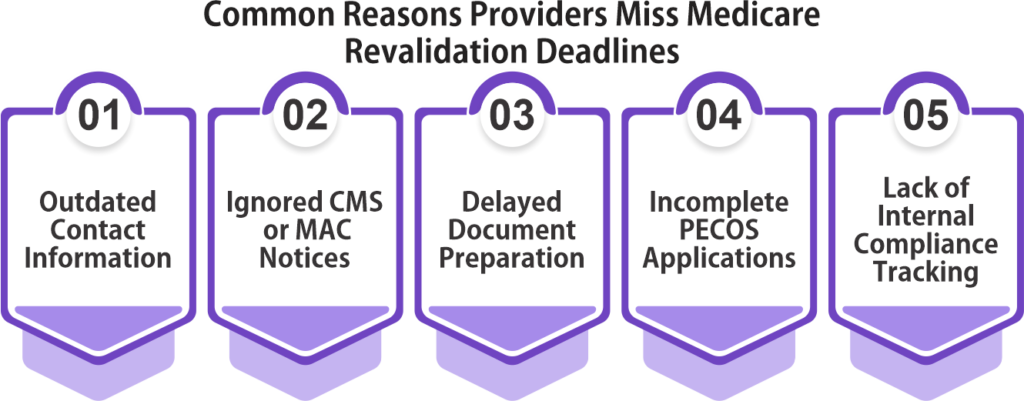
Outdated Contact Information
CMS and your Medicare Administrative Contractor (MAC) send important revalidation notices using the contact information on file. Outdated email addresses, phone numbers, or mailing addresses can result in missed notifications.
1. Review contact information regularly.
2. Update PECOS after practice changes.
3. Verify mailing and email addresses.
Ignored CMS or MAC Notices
Some providers overlook emails or letters requesting CMS Medicare revalidation because they are mistaken for routine correspondence. Missing these notices can delay the revalidation process and increase the risk of billing privilege deactivation.
1. Review all CMS communications.
2. Monitor email spam and junk folders.
3. Assign staff to track official notices.
Delayed Document Preparation
Waiting until the Medicare revalidation deadline approaches may leave insufficient time to gather required documents. Preparing records early helps reduce submission delays and missing information.
1. Collect documents before the deadline.
2. Verify license and enrollment records.
3. Keep provider information current.
Incomplete PECOS Applications
Incomplete or inaccurate PECOS applications may require additional review or requests for supporting documents. Reviewing every section before submission helps improve processing efficiency.
1. Complete every required field.
2. Upload all supporting documents.
3. Review the application for accuracy.
Lack of Internal Compliance Tracking
Practices without a compliance tracking process are more likely to overlook important enrollment deadlines. A simple monitoring system helps staff follow upcoming revalidation requirements and maintain active Medicare participation.
1. Maintain a compliance calendar.
2. Assign responsibility to a team member.
3. Review upcoming deadlines regularly.
How to Prevent Missing Future Medicare Revalidation Deadlines
Preventing a missed Medicare revalidation deadline requires regular monitoring and a clear compliance process. The following best practices help healthcare providers, practice managers, and billing teams complete the Medicare revalidation process on time and maintain active Medicare billing privileges.
Monitor the CMS Medicare Revalidation Due Date List
CMS publishes the Medicare Revalidation Due Date List several months before providers must complete revalidation. Reviewing the list regularly helps practices identify upcoming deadlines and prepare in advance.
Check the due date list at least once each month and confirm your assigned Medicare revalidation deadline. Do not rely only on reminder letters or emails from CMS or your Medicare Administrative Contractor (MAC).
Record the due date in your compliance calendar and begin gathering required information as soon as it appears. Early preparation reduces last-minute delays and helps maintain active Medicare billing privileges.
Keep PECOS and Contact Information Updated
Accurate information in PECOS allows CMS and your Medicare Administrative Contractor (MAC) to send important enrollment notices. Incorrect contact details can cause providers to miss critical revalidation communications.
Review your practice address, email, phone number, ownership details, and correspondence information whenever changes occur. Prompt updates help keep your Medicare enrollment records current.
Verify your PECOS profile regularly, even when no changes are expected. Periodic reviews reduce the risk of outdated information delaying the Medicare revalidation process.
Assign a Compliance Coordinator
Assign a staff member to oversee CMS Medicare revalidation activities and monitor enrollment requirements. Clear responsibility helps ensure important deadlines are not overlooked.
The compliance coordinator should work closely with billing, credentialing, and administrative teams to monitor provider enrollment status. Regular communication improves accountability across the practice.
Tracking upcoming deadlines, application submissions, and CMS notices through one designated individual helps reduce missed tasks. This process supports timely Medicare provider revalidation.
Create an Internal Reminder System
An internal reminder system helps providers prepare for revalidation well before the assigned deadline. Calendar alerts reduce the chance of overlooking important enrollment dates.
Schedule multiple reminders beginning several months before the Medicare revalidation deadline. Sharing reminders with billing and credentialing staff improves team awareness and preparation.
Review upcoming deadlines during regular administrative meetings and update reminder schedules whenever provider information changes. Consistent follow-up supports continuous Medicare compliance.
Maintain Accurate Enrollment Records
Organized enrollment records make the Medicare revalidation process easier to complete and review. Current documentation also helps providers respond quickly to CMS requests.
Maintain updated copies of licenses, certifications, ownership records, practice addresses, and other enrollment documents. Accurate records reduce delays caused by missing or outdated information.
Review enrollment documents before submitting a revalidation application to confirm that all information matches your current Medicare records. Careful preparation supports faster application processing.
Conclusion
Missing a Medicare revalidation deadline can interrupt Medicare billing, delay reimbursements, and affect your practice’s financial stability. Understanding the Medicare revalidation process and responding promptly to CMS requirements helps reduce compliance risks and maintain uninterrupted billing privileges.
Regularly monitoring your revalidation due date, maintaining accurate PECOS records, and responding quickly to CMS or Medicare Administrative Contractor (MAC) requests can prevent avoidable enrollment issues. A structured compliance process also helps practices minimize administrative delays and payment disruptions.
FAQs
What happens if I miss my Medicare revalidation deadline?
If you miss your Medicare revalidation deadline, CMS may deactivate your Medicare billing privileges. This can interrupt claim submissions and delay Medicare reimbursements until your enrollment is reactivated.
How can I check my Medicare revalidation due date?
You can check your due date through the CMS Medicare Revalidation Due Date List or by logging into PECOS. Reviewing your status regularly helps prevent missed deadlines.
Can I continue billing Medicare after my billing privileges are deactivated?
No. Once your Medicare billing privileges are deactivated, Medicare generally will not pay claims for services provided during the deactivation period until your enrollment is restored.
How do I reactivate my Medicare enrollment after missing revalidation?
Submit a complete Medicare revalidation application through PECOS or the required CMS enrollment forms and respond promptly to any requests from your Medicare Administrative Contractor (MAC).
How can healthcare practices avoid missing future Medicare revalidation deadlines?
Monitor the CMS revalidation due date list, keep PECOS information, assign responsibility to a compliance team member, and use reminder systems to track upcoming deadlines.