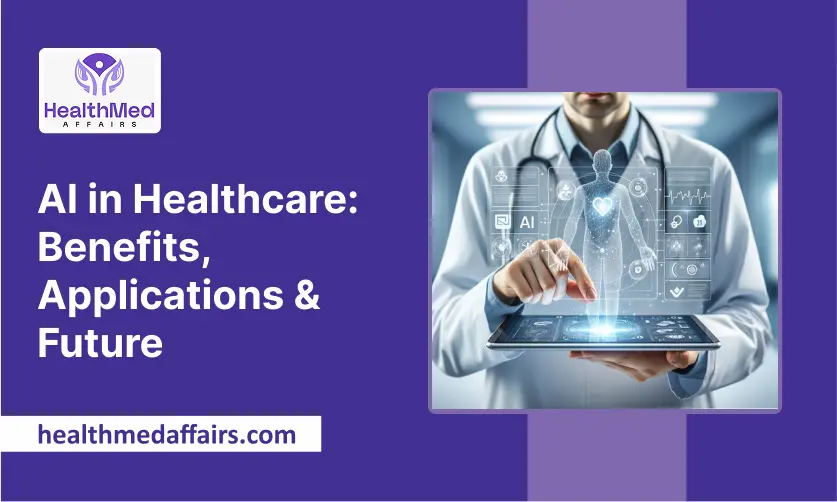
Artificial intelligence (AI) is transforming healthcare by improving diagnostics, streamlining clinical workflows, and supporting better patient outcomes. From hospitals to pharmaceutical companies, AI is reshaping how healthcare professionals deliver efficient, data-driven, and personalized care.
As healthcare systems face rising costs, workforce shortages, and increasing volumes of patient data, artificial intelligence in healthcare has become a strategic necessity. It empowers clinicians, researchers, and medical affairs teams to make faster, more informed decisions while improving operational efficiency.
In this guide, you’ll discover how AI is revolutionizing the healthcare industry, its real-world applications, benefits, challenges, and future potential. We’ll also explore how healthcare organizations can responsibly adopt AI to enhance patient care and drive innovation.
What is AI in Healthcare?
Artificial intelligence (AI) in healthcare refers to the use of advanced technologies that can analyze medical data, identify patterns, and support clinical decision-making. Unlike traditional healthcare software, AI continuously learns from data, enabling healthcare providers to deliver faster diagnoses, personalized treatments, and more efficient patient care.
Artificial intelligence healthcare is powered by technologies such as machine learning, deep learning, natural language processing (NLP), computer vision, and predictive analytics. These technologies help healthcare organizations transform complex medical data into actionable insights, improving both clinical and operational outcomes.
How AI Differs from Traditional Healthcare Software
Traditional healthcare software follows predefined rules to perform specific tasks, such as storing patient records or managing appointments. AI goes a step further by learning from data, recognizing patterns, predicting outcomes, and assisting healthcare professionals in making more informed decisions. Rather than replacing clinicians, AI acts as a powerful decision-support tool that enhances efficiency and accuracy.
Core Technologies Behind AI in Healthcare
- Machine Learning (ML):
Learns from healthcare data to predict diseases, identify patient risks, and support clinical decisions.
- Deep Learning (DL):
Analyzes complex medical images like X-rays, CT scans, and MRIs to detect diseases with high accuracy.
- Natural Language Processing (NLP):
Extracts valuable information from clinical notes, medical records, and research documents.
- Computer Vision: Helps interpret medical images for diagnostics in radiology, pathology, and other specialties.
- Predictive Analytics:
Uses patient data to forecast health risks, hospital readmissions, and disease progression.
- Generative AI:
Assists with medical documentation, clinical summaries, patient education, and medical affairs workflows, improving productivity across healthcare organizations.
Why AI is Transforming Modern Healthcare
Healthcare is evolving rapidly, driven by increasing patient demands, growing volumes of medical data, and the need for more efficient care delivery. Artificial intelligence is helping bridge these gaps by enabling healthcare organizations to make faster, smarter, and more accurate decisions while reducing operational burdens.
Here’s why AI has become a game-changer for modern healthcare:
Managing Massive Volumes of Data
Healthcare systems generate enormous amounts of data every day. AI can analyze electronic health records, diagnostic reports, medical images, and research data within seconds, uncovering insights that would take humans much longer to identify.
Addressing Workforce Shortages
With healthcare professionals facing increasing workloads, AI automates repetitive administrative tasks such as documentation, scheduling, and data entry, allowing clinicians to spend more time with patients.
Reducing Healthcare Costs
AI improves operational efficiency by streamlining workflows, minimizing unnecessary tests, and supporting early disease detection, helping healthcare organizations reduce costs without compromising care quality.
Enabling Personalized Care
By analyzing an individual’s medical history, genetics, and lifestyle, AI helps healthcare providers develop personalized treatment plans that improve patient outcomes and support precision medicine.
Supporting Better Clinical Decisions
AI-powered decision support systems provide clinicians with evidence-based recommendations, helping them diagnose conditions earlier, reduce errors, and make more informed treatment decisions.
As AI technologies continue to advance, their role is expanding beyond automation to become a trusted partner in delivering safer, more efficient, and patient-centered healthcare.
Top Applications of AI in Healthcare
Artificial intelligence is transforming every stage of the healthcare ecosystem, helping providers improve patient care, streamline operations, accelerate medical research, and make faster, data-driven clinical decisions.
1. Medical Diagnosis
AI helps healthcare professionals identify diseases earlier by analyzing patient data, symptoms, and test results with greater speed and accuracy.
- Early disease detection
- Faster clinical assessments
- Improved diagnostic accuracy
- Reduced diagnostic errors
2. Medical Imaging
AI-powered imaging tools assist radiologists in detecting abnormalities across various scans, supporting quicker diagnoses and more confident clinical decisions.
- X-ray image analysis
- CT scan interpretation
- MRI abnormality detection
- Cancer screening support
3. Drug Discovery and Development
AI accelerates pharmaceutical research by identifying promising drug candidates, predicting outcomes, and optimizing clinical trial processes.
- Faster drug discovery
- Clinical trial optimization
- Molecule identification
- Reduced research costs
4. Clinical Decision Support
AI provides evidence-based recommendations that help clinicians make informed treatment decisions while improving patient safety and healthcare outcomes.
- Treatment recommendations
- Risk assessment tools
- Evidence-based insights
- Real-time clinical support
5. Personalized Medicine
AI analyzes patient-specific data to create customized treatment plans that improve effectiveness and support precision healthcare.
- Tailored treatment plans
- Genetic data analysis
- Precision healthcare delivery
- Improved patient outcomes
6. Remote Patient Monitoring
AI continuously monitors patient health through connected devices, enabling early intervention and proactive management of chronic conditions.
- Wearable health devices
- Real-time patient monitoring
- Chronic disease management
- Early health alerts
7. Administrative Automation
AI automates repetitive administrative processes, allowing healthcare professionals to focus more on delivering quality patient care.
- Medical documentation
- Appointment scheduling
- Billing automation
- Workflow optimization
8. Predictive Analytics
AI analyzes historical and real-time healthcare data to predict health risks and improve preventive care strategies.
- Disease risk prediction
- Hospital readmission forecasting
- Population health insights
- Preventive care planning
9. Medical Affairs Support
AI streamlines medical affairs activities by improving scientific research, literature analysis, and regulatory documentation workflows.
- Literature review automation
- Medical writing assistance
- Pharmacovigilance support
- Scientific communications
10. Virtual Health Assistants
AI-powered virtual assistants improve patient engagement by answering questions, scheduling appointments, and providing healthcare guidance.
- Patient query support
- Appointment management
- Medication reminders
- Health education assistance
AI in Medical Affairs
While AI is transforming clinical care, its impact extends far beyond hospitals and diagnostics. Medical affairs teams are increasingly using AI to improve scientific communication, accelerate evidence generation, streamline regulatory processes, and support informed decision-making. By automating repetitive tasks and uncovering valuable insights from large datasets, AI enables medical affairs professionals to focus on delivering greater strategic and scientific value.
| Medical Affairs Function | How AI Adds Value |
| Medical Information | Delivers faster, more accurate responses to medical inquiries using intelligent search and knowledge management. |
| Medical Writing | Assists in drafting clinical documents, scientific manuscripts, and regulatory content while improving consistency and efficiency. |
| Scientific Literature Review | Quickly analyzes thousands of research publications to identify relevant evidence and emerging trends. |
| Pharmacovigilance | Detects potential safety signals by monitoring adverse event reports and supporting timely risk assessment. |
| Regulatory Documentation | Simplifies the preparation and review of regulatory submissions while ensuring compliance with industry standards. |
| Scientific Communications | Supports the development of presentations, publications, and educational materials for healthcare professionals. |
| Real-World Evidence (RWE) | Extracts meaningful insights from real-world data to support clinical decisions and demonstrate treatment effectiveness. |
| Medical Strategy | Helps identify trends, stakeholder needs, and emerging therapeutic opportunities through advanced data analytics. |
As AI adoption grows, organizations investing in Medical Affairs Services can enhance efficiency, strengthen scientific communication, and deliver evidence-based insights that improve healthcare outcomes.
Benefits of Artificial Intelligence in Healthcare
Artificial intelligence is helping healthcare organizations improve patient care, streamline operations, and make faster, data-driven decisions. Its ability to analyze large volumes of data is driving innovation across every area of modern healthcare.
Key Benefits
- Faster and more accurate diagnoses
- Improved patient outcomes
- Personalized treatment plans
- Enhanced clinical decision-making
- Reduced administrative workload
- Lower healthcare costs
- Early disease detection
- Better patient engagement
- Accelerated drug discovery
- Increased operational efficiency
By combining human expertise with intelligent automation, AI is enabling healthcare providers to deliver safer, more efficient, and patient-centered care. As adoption continues to grow, artificial intelligence healthcare will play an even greater role in improving healthcare quality and accessibility worldwide.
Real-World Examples of AI in Healthcare
Artificial intelligence is already delivering measurable results across hospitals, research institutions, and pharmaceutical companies. These real-world applications demonstrate how AI is improving diagnosis, treatment, medical research, and operational efficiency.
Examples of AI in Action
- AI-powered medical imaging
- Drug discovery and development
- Clinical decision support systems
- Remote patient monitoring
- Virtual health assistants
- Predictive healthcare analytics
- AI-assisted robotic surgery
- Medical documentation automation
These innovations show that AI is no longer a future concept but an integral part of modern healthcare. As technology continues to evolve, healthcare organizations that embrace AI responsibly will be better positioned to improve patient outcomes and drive long-term innovation.
Generative AI in Healthcare
Generative AI is the latest advancement in artificial intelligence healthcare, enabling healthcare professionals to create, summarize, and analyze medical content faster than ever. From clinical documentation to patient communication, it is improving productivity across the healthcare ecosystem.
How Generative AI is Making an Impact
- Drafts clinical documentation in minutes.
- Summarizes patient records for quicker clinical review.
- Supports medical writing with structured scientific content.
- Creates patient education materials using easy-to-understand language.
- Assists medical information teams by retrieving relevant scientific evidence.
- Automates administrative workflows to reduce clinician burnout.
As healthcare organizations continue adopting generative AI responsibly, the technology will play a key role in improving efficiency, enhancing decision-making, and allowing healthcare professionals to spend more time delivering quality patient care.
Challenges and Ethical Considerations of AI in Healthcare
Despite its transformative potential, AI in healthcare comes with challenges that organizations must address to ensure safe, ethical, and responsible adoption. Overcoming these barriers is essential for building trust and delivering reliable patient care.
| Challenge | Why It Matters |
| Data Privacy | Protecting sensitive patient information from breaches and unauthorized access. |
| Algorithm Bias | Reducing bias to ensure fair and accurate healthcare decisions for all patients. |
| Regulatory Compliance | Meeting healthcare regulations and industry standards for AI implementation. |
| Clinical Validation | Ensuring AI systems are thoroughly tested before clinical use. |
| Transparency | Making AI-driven recommendations understandable for healthcare professionals. |
| Human Oversight | Keeping clinicians involved in critical healthcare decisions. |
| System Integration | Integrating AI seamlessly with existing healthcare technologies and workflows. |
| Ethical Responsibility | Using AI responsibly while maintaining patient trust and accountability. |
Successfully addressing these challenges will enable healthcare organizations to unlock the full potential of artificial intelligence while ensuring patient safety, compliance, and long-term innovation.
How Healthcare Organizations Can Successfully Implement AI
Successfully implementing AI requires more than adopting new technology. Healthcare organizations need a clear strategy, quality data, and continuous oversight to maximize its benefits while ensuring patient safety.
A 5-Step AI Implementation Roadmap
Step 1: Identify High-Impact Use Cases
Focus on areas where AI can improve patient care, clinical workflows, or operational efficiency.
Step 2: Build a Strong Data Foundation
Ensure healthcare data is accurate, secure, and compliant with regulatory requirements.
Step 3: Integrate AI into Existing Workflows
Deploy AI solutions that work seamlessly with electronic health records (EHRs) and existing healthcare systems.
Step 4: Train Healthcare Professionals
Equip clinicians and staff with the knowledge needed to use AI tools effectively and responsibly.
Step 5: Monitor, Evaluate, and Improve
Continuously assess AI performance, address potential risks, and refine systems to maintain accuracy and compliance.
A well-planned AI strategy enables healthcare organizations to achieve sustainable innovation and better patient outcomes. Explore how Health Med Affairs can support your healthcare transformation journey with expert industry insights and tailored solutions.
The Future of AI in Healthcare
The future of AI in healthcare will be driven by advancements in generative AI, predictive analytics, precision medicine, and intelligent automation. These technologies will help healthcare organizations deliver more personalized care, improve clinical decision-making, and enhance operational efficiency.
As AI continues to evolve, successful adoption will depend on responsible governance, data security, and human oversight. By combining technological innovation with clinical expertise, artificial intelligence healthcare will continue to shape a smarter, more efficient, and patient-centered future.
Conclusion
AI in healthcare is transforming the way healthcare organizations diagnose diseases, deliver patient care, conduct medical research, and streamline operations. As artificial intelligence healthcare continues to evolve, organizations that adopt AI responsibly will be better positioned to improve efficiency, enhance patient outcomes, and drive innovation.
Whether you’re exploring AI for clinical practice, medical affairs, or healthcare operations, staying informed is essential. Visit Health Med Affairs to discover expert insights, industry updates, and practical solutions that help navigate the future of healthcare with confidence.
Frequently Asked Questions (FAQs)
1. What is AI in healthcare?
AI in healthcare refers to the use of artificial intelligence technologies to analyze medical data, support clinical decisions, automate workflows, and improve patient outcomes.
2. How is artificial intelligence used in healthcare?
Artificial intelligence healthcare is used for medical diagnosis, medical imaging, drug discovery, predictive analytics, clinical decision support, and administrative automation.
3. What are the benefits of AI in healthcare?
AI improves diagnostic accuracy, enhances patient care, reduces operational costs, automates repetitive tasks, and supports personalized treatment plans.
4. Can AI replace healthcare professionals?
No. AI is designed to assist healthcare professionals by improving efficiency and decision-making, not replace their clinical expertise.
5. What are the biggest challenges of AI in healthcare?
Key challenges include data privacy, algorithm bias, regulatory compliance, system integration, and ensuring human oversight in clinical decisions.
6. What is the future of AI in healthcare?
The future of AI includes advancements in generative AI, precision medicine, predictive healthcare, and intelligent automation, enabling more efficient and patient-centered healthcare systems.